
Table of Contents
Introduction — The Quiet Power of Passion
There’s a rare kind of energy that surrounds people who live through their passions — not just for recognition or success, but for the quiet joy of building something that matters. Mike Wolfe, best known as the creator and star of American Pickers, embodies that spirit perfectly. But beyond television and treasure hunts, the phrase “Mike Wolfe Passion Project” symbolizes something deeper — the art of transforming curiosity into purpose, and purpose into a legacy.
Passion Project isn’t just about a website; it’s about an ecosystem of creativity, growth, and authenticity. It’s a reminder that our greatest works often begin as small sparks of fascination — moments we could easily overlook. And yet, when tended with care and courage, those sparks can light entire worlds.
At PassionProject.net, we believe that creativity isn’t a gift for the few — it’s a daily practice, a mindset, and a way of life. And the story of Mike Wolfe reminds us why.
The Story Behind the Spark
Before he became a household name, Mike Wolfe was just another dreamer with a keen eye for forgotten things. He found beauty where others saw rust — old motorcycles, faded signs, vintage tools — relics of craftsmanship and time. His passion project began long before fame: it started in garages, flea markets, and long drives down quiet country roads.
Wolfe’s journey wasn’t linear. Like most passion-driven paths, it twisted through uncertainty, self-doubt, and unconventional choices. What set him apart wasn’t luck — it was attention. He noticed what others missed. He cared about stories behind objects. In a world obsessed with the new, he valued the old — not for nostalgia, but for meaning.
There’s a powerful metaphor here for creators and dreamers. Your version of a “rusty bike” might be a half-written song, an idea for a social enterprise, or a desire to teach others. It may not look impressive at first — but if you stay with it long enough, it can become your life’s signature.
As Wolfe once said, “Every pick tells a story. You’re not just finding things — you’re finding people’s lives.” That’s the soul of a true passion project: it connects creativity with humanity.
Redefining Success: Beyond Money and Fame
In a world that rewards visibility, the most meaningful success stories often remain quiet. The Mike Wolfe Passion Project reminds us that fulfillment doesn’t come from applause — it comes from alignment.
Many of us chase goals society deems important: financial security, recognition, or productivity. But those external markers can quickly lose color if they’re not anchored in why. Wolfe’s career illustrates that the truest kind of wealth comes from doing what feels deeply right — even when no one else understands it.
He didn’t create American Pickers to become a celebrity; he built it to share a lifestyle rooted in curiosity and preservation. The irony? His authenticity became his greatest brand.
At Passion Project, we often explore this paradox — how success found through meaning tends to outlast the kind earned through metrics. In our article on building creative discipline, we explored how small rituals lead to mastery. The same principle applies here: mastery of life itself begins when we stop measuring it only through output, and start feeling it through connection.
When work becomes aligned with soul, it stops being “work.” It becomes art.
The Psychology of Purposeful Work

Psychologists describe “flow” as the state where effort disappears — where time blurs and you merge with what you’re doing. It’s the psychological heart of creativity, and Mike Wolfe seems to live inside that flow. When passion meets skill, and when purpose meets curiosity, work transforms into a calling.
Yet, maintaining that state isn’t easy. The mind often resists uncertainty. Passion projects, by nature, come without guarantees — they test patience, ego, and self-worth. The difference between those who quit and those who grow lies in emotional endurance.
Here’s what research tells us: people who link their projects to personal meaning — not just outcomes — experience more resilience and long-term satisfaction. It’s not the hours that drain us; it’s the disconnection from what those hours stand for.
Wolfe’s story echoes this psychology. Every object he restores carries emotional weight; it’s a conversation with history. That emotional connection fuels his energy.
For modern creators, that’s the takeaway: when you build something, don’t just ask, “Will this succeed?” Ask instead, “Does this feel alive in me?”
From Hobby to Movement: The Evolution of a Passion Project
The journey from private obsession to public movement is one of the most fascinating arcs in human creativity. The Mike Wolfe Passion Project evolved this way — from tinkering with antiques to inspiring a generation to see beauty in the overlooked.
Every great movement begins as a small act of devotion. A writer journaling alone. A designer sketching for no one. A teacher staying late to help a student. Over time, those moments ripple outward, creating culture.
What makes Wolfe’s story unique is how he blended craftsmanship with storytelling. He didn’t just restore items; he restored meaning. In doing so, he transformed individual nostalgia into collective appreciation.
Passion Project readers will recognize this theme — the shift from self-expression to contribution. Passion becomes sustainable when it serves something larger than the self. Whether that’s community, education, art, or innovation, the moment your personal spark lights someone else’s path, it becomes a legacy.
That’s the turning point — where your “thing” stops being a hobby and starts becoming a movement.
Creative Resilience: What Keeps the Flame Alive
Passion is not constant. It breathes. It expands and contracts. Many creators mistake exhaustion for failure, or silence for loss of inspiration. But as Wolfe’s journey shows, creativity is cyclical — and so is passion.
He often speaks about balance — how the road trips, the finds, and even the quiet days of sorting through barns all feed different parts of his spirit. There’s wisdom here: to sustain a passion project, you must learn to move between creation and reflection.
According to studies in creative psychology, this rhythm — called incubation — is crucial for long-term originality. It’s the reason why breakthroughs often come after rest.
So, if you feel disconnected from your passion lately, maybe you don’t need to push harder. Maybe you just need to pause.
As the team at PassionProject.net often writes, growth is not just about doing more — it’s about noticing more. Awareness is the creative act behind every great idea.
The Framework for Sustainable Passion
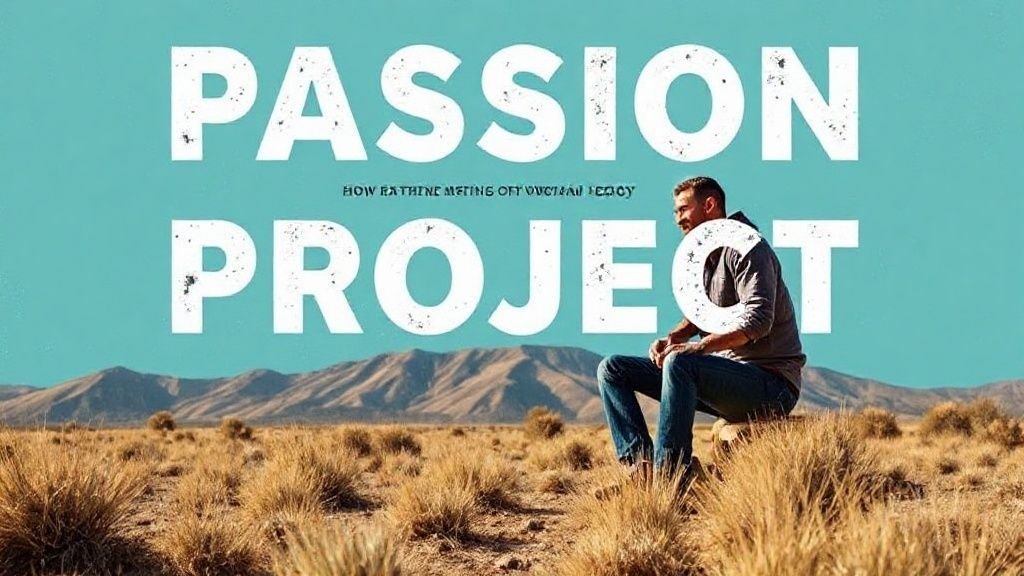
How do we keep a passion project alive when life gets noisy? Here’s a simple framework inspired by creators like Mike Wolfe and research in positive psychology:
1. Purpose: Anchor in Meaning
Ask yourself why this matters to you — not why it should matter to others. Meaning gives direction when motivation fades.
2. Play: Keep Curiosity Alive
Passion thrives on exploration. Keep a beginner’s mind. Let yourself experiment, fail, and rediscover joy.
3. Practice: Build Systems, Not Just Bursts
As we explored in our piece on creative discipline, consistency turns passion into progress. Create small, repeatable habits that protect your energy and output.
4. People: Build a Support Ecosystem
No project thrives in isolation. Seek communities — online or in person — that reflect your values. Collaboration multiplies meaning.
5. Presence: Protect the Why
Schedule regular pauses to reflect. Passion without reflection becomes pressure. Passion with reflection becomes art.
This framework isn’t rigid. It’s a compass — one that reminds you that creativity is not a straight line, but a conversation with your own becoming.
The Art of Becoming Through What You Love
At its heart, the Mike Wolfe Passion Project isn’t about antiques — it’s about awareness, craftsmanship, and care. It’s a metaphor for what it means to live deliberately: to look closer, to value what’s been forgotten, and to turn small fascinations into lifelong impact.
In your own life, passion may not look glamorous. It might feel uncertain or slow. But that’s how most meaningful journeys begin — quietly, with a whisper instead of applause.
As you reflect on your own creative path, remember this: passion is not found. It’s cultivated. It grows in the soil of curiosity, patience, and self-trust.
And when nurtured, it becomes more than a project — it becomes a philosophy of living.
Discover more insights, stories, and resources on creativity and growth at PassionProject.net — your reliable and inspiring companion for change.
The Deep Work of Passion: When Creativity Becomes a Lifelong Conversation
After passion finds its rhythm, something subtle begins to shift. What was once excitement becomes devotion. The Mike Wolfe Passion Project is no longer about collecting artifacts of the past — it’s about understanding the language of time itself. Each restored object becomes a meditation on patience, precision, and persistence.
This is the stage many creators quietly enter without realizing it: the move from curiosity to craftsmanship. Passion deepens when you start to see your work not just as a means of expression, but as a dialogue between who you are and what the world needs. The spark of enthusiasm becomes a steady flame of mastery.
At PassionProject.net, we often describe this moment as the “long middle” — that season when inspiration becomes labor, when meaning demands maintenance. It’s not glamorous, but it’s sacred. Because this is where real artists, entrepreneurs, and dreamers are forged.
The Invisible Discipline of Mastery
Mike Wolfe’s story reminds us that mastery isn’t a moment — it’s a maintenance practice. Every restored sign, every rescued relic, every filmed episode is a testament to the invisible hours of research, restoration, and reflection.
This invisible discipline is what most people never see. Passion is visible — it glows on the surface — but mastery hides in the hours spent refining, failing, and starting again. Wolfe’s barns full of forgotten pieces are metaphors for our own creative archives: the drafts, sketches, and experiments that never make it public but quietly shape our excellence.
In psychology, this stage is known as deliberate practice — the process of refining through repetition and awareness. It’s not just doing the work; it’s studying how the work transforms you. Passion gives you energy, but discipline gives it direction.
As we explored in our article on building creative discipline, mastery is born not in motivation, but in mindful repetition. Small rituals — a daily routine, a weekly reflection, a commitment to craft — are what keep passion from burning out.
The Emotional Landscape of Creative Work
Passion doesn’t only live in inspiration; it also lives in frustration. There are days when ideas stall, when results don’t match vision, when you question the point of it all. Yet, those emotional lows are not signs of failure — they’re signs of engagement.
Mike Wolfe often speaks about the patience required to find “the one piece worth saving” amid thousands of forgotten items. That same patience applies to our creative and personal journeys. Most of our ideas won’t work. Most of our efforts will go unseen. But passion thrives on depth, not volume.
Psychologists like Mihaly Csikszentmihalyi call this “the challenge-skill balance.” When what we do is just difficult enough to stretch us — not break us — we enter a state of growth. The Mike Wolfe Passion Project exemplifies this: balancing challenge with joy, effort with curiosity, and work with wonder.
So, if your creative path feels uncertain, take it as proof that you’re still alive inside the process. Uncertainty isn’t the enemy of passion — it’s its companion.
The Quiet Power of Curation

There’s a beautiful difference between collecting and curating. Collecting fills space; curating creates meaning. Wolfe’s genius lies in his ability to see stories inside objects — to weave narratives from fragments.
In your own creative or professional life, this principle applies deeply. Whether you’re building a brand, writing a book, or designing a product, the goal isn’t to gather more — it’s to clarify what matters. Curation is the art of choosing with purpose.
When we curate our time, our ideas, and our attention, we begin to live intentionally. Purposeful curation transforms a passion project into a body of work. It’s the moment you move from “doing” to “designing” — shaping your life around what gives it the most meaning.
That’s the soul of creative integrity. To not just create endlessly, but to create honestly.
Community and the Shared Spark
No passion project thrives in isolation. Even Mike Wolfe — a man who began alone on back roads and in dusty garages — built a network of craftspeople, historians, and dreamers who shared his vision. Community doesn’t dilute passion; it magnifies it.
At PassionProject.net, we often highlight the importance of collaborative ecosystems. Whether online or in person, creative communities act as mirrors and catalysts. They help us refine ideas, stay accountable, and see ourselves through others’ perspectives.
Building community doesn’t always mean finding people who do what you do — sometimes it means surrounding yourself with people who believe in what you do. They remind you that your work has worth, even when results are delayed.
In one interview, Wolfe described how local artisans and small-town storytellers inspired his show’s deeper narrative. Their trust gave him purpose. Likewise, our creative passions grow strongest when they connect to something collective — a shared value, a shared dream, a shared act of care.
The Patience of Impact
Every legacy takes time. Passion wants quick results; purpose understands slow growth. Mike Wolfe’s journey from obscure picker to cultural preservationist took decades of consistency. Each small decision — each repaired relic — built toward a bigger story.
We live in a culture that worships speed, but meaning has always been a slow art. True impact isn’t a viral moment; it’s a lifelong offering.
At this stage, patience becomes a creative virtue. It teaches us to measure success not by speed, but by substance. To keep showing up, even when applause fades. To trust that our small acts of devotion — the writing, the crafting, the learning — will someday find their audience.
As the old saying goes, “The trees we plant today give shade to people we may never meet.” That is the quiet promise of every passion project done with love.
Designing a Life Around What You Love
The most powerful outcome of the Mike Wolfe Passion Project isn’t fame or success — it’s alignment. Wolfe designed a life that reflects his values: simplicity, storytelling, and craftsmanship. His work isn’t separate from who he is; it’s an extension of his curiosity and care.
Designing a life around what you love doesn’t mean abandoning responsibility; it means reorganizing your priorities. It’s choosing to invest in what sustains your soul, not just your schedule.
Here’s a gentle framework for doing that:
1. Define Your “Creative North”
What feeling do you want your work to leave behind? Clarity of direction is the first form of design.
2. Edit Ruthlessly
Let go of projects that no longer resonate. As in design, subtraction often creates harmony.
3. Protect Creative Time
Schedule it as you would any serious meeting. Creativity deserves structure.
4. Balance Making with Meaning
Don’t just produce — reflect. Ask yourself regularly: Why am I still doing this? What has it taught me?
5. Integrate, Don’t Separate
Let your creativity inform how you rest, love, and connect. A creative life is a coherent one.
When your values and work align, effort feels lighter. Every choice begins to echo your purpose.
The Return to Self
All passion projects, no matter how public, eventually lead inward. They become a mirror through which we understand ourselves better. Wolfe’s deep respect for the stories of others taught him something profound about his own. In restoring forgotten artifacts, he restored pieces of his identity — patience, empathy, gratitude.
This is the essence of all creative work: we think we’re shaping something outside ourselves, but in truth, it’s shaping us.
The Mike Wolfe Passion Project isn’t just about what’s found; it’s about what’s remembered — the parts of ourselves that reawaken when we devote time to something that matters.
And that’s the secret most people miss: passion projects don’t just build portfolios. They build people.
Closing Reflection

If Part 1 was about discovering passion, this chapter is about sustaining it — through discipline, purpose, and presence. The real work of creativity isn’t in the moment of inspiration; it’s in the thousands of moments after, when you choose to keep going.
Mike Wolfe’s journey is a living example of that truth. It’s not about the things he’s found, but about the spirit he’s preserved — a belief that meaning still exists in what others discard.
So as you continue building your own passion project, remember: your work doesn’t need to change the world overnight. It just needs to change you — slowly, honestly, consistently. The world will follow in its own time.
Discover more reflections, creative frameworks, and personal-growth stories at PassionProject.net — your reliable and inspiring companion for living a purpose-driven life.